OBT
- By obert-2
- Oct 09 2026
How to Select the Right Generator Set Muffler for Industrial and Commercial Applications
Generator sets are widely used in factories, construction sites, commercial buildings, hospitals, data centers, and other facilities that require a reliable power supply. During operation, the engine produces exhaust gases and noise that must be managed through a properly designed exhaust system. Selecting the right generator set muffler is therefore an important consideration for equipment manufacturers, distributors, and industrial buyers.
A suitable muffler helps control exhaust noise while maintaining appropriate gas flow and supporting reliable engine operation. However, not every muffler is suitable for every generator. Engine specifications, operating conditions, installation space, material requirements, and local noise regulations should all be considered before purchasing.
For B2B buyers, understanding these factors can make supplier evaluation more efficient and help reduce compatibility problems during installation and long-term use.
- Understand the Generator's Operating Requirements
The first step in selecting a generator set muffler is to identify the requirements of the engine and the complete exhaust system.
Different generator sets produce different exhaust flow rates, temperatures, and noise levels. A muffler designed for a small standby generator may not be suitable for a large industrial diesel generator operating under heavy loads.
Before requesting a quotation, buyers should prepare the following information:
Engine brand and model Generator rated power and operating conditions Exhaust gas flow rate, where available Exhaust outlet diameter and connection type Available installation space Required noise attenuation Expected operating hours and service environment
These details help the manufacturer evaluate the application and recommend a suitable design. If the muffler is being purchased for an existing generator model, drawings, photographs, and measurements of the original component can also help establish compatibility.
For OEM projects, providing technical specifications at the beginning of the development process can reduce unnecessary design changes and improve communication between the buyer and manufacturer. - Choose the Appropriate Noise Reduction Performance
Noise reduction is one of the primary functions of a generator set muffler. Depending on the application, generators may operate near residential areas, office buildings, commercial facilities, or industrial production lines, where excessive noise can create operational and environmental concerns.
Different muffler structures provide different acoustic characteristics. Common designs include reactive mufflers, absorptive mufflers, and combination mufflers.
Reactive mufflers use internal chambers and passages to reflect and interfere with sound waves. Their performance depends on the internal geometry and the frequencies that need to be controlled.
Absorptive mufflers use sound-absorbing materials to reduce certain noise components. Their effectiveness depends on the material, construction, temperature resistance, and exhaust conditions.
Combination designs integrate reactive and absorptive principles to address a broader range of noise frequencies.
When comparing products, buyers should not evaluate performance solely by the external size or appearance of the muffler. Request information about the tested noise attenuation, measurement conditions, and compatibility with the intended engine.
It is also important to distinguish between exhaust noise and overall generator noise. A muffler addresses noise transmitted through the exhaust system, but it does not eliminate mechanical noise, cooling fan noise, or vibration from other equipment. - Consider Exhaust Back Pressure and Gas Flow
Noise reduction must be balanced with the exhaust requirements of the engine. Excessive exhaust back pressure can negatively affect engine performance, fuel consumption, exhaust temperature, and component durability.
A generator set muffler should therefore be selected according to the engine manufacturer's allowable exhaust back-pressure limits.
Important design factors include the internal passage geometry, inlet and outlet dimensions, chamber arrangement, and exhaust flow resistance. A muffler with an unnecessarily restrictive internal structure may not be suitable for an engine that requires high exhaust flow.
Buyers should provide the engine manufacturer's back-pressure requirements and request technical confirmation that the proposed muffler is appropriate for the application.
The entire exhaust system must also be considered. Pipes, elbows, flexible connections, silencers, and other components contribute to the total pressure loss. Selecting a muffler without evaluating the connected exhaust piping may lead to an unsuitable installation.
For customized generator projects, reviewing the exhaust layout and operating conditions before production helps establish a more reliable solution. - Select Materials for the Operating Environment
Material selection has a direct influence on the durability and service life of a generator exhaust muffler. The most appropriate material depends on exhaust temperature, moisture exposure, outdoor conditions, operating cycles, and maintenance expectations.
Carbon steel is commonly considered for applications where cost efficiency and suitable structural strength are priorities. Depending on the coating and operating environment, corrosion protection may be necessary.
Stainless steel can provide improved corrosion resistance in suitable grades and operating conditions. It may be appropriate for applications involving moisture, outdoor exposure, or more demanding environmental requirements.
Material selection should not be based on price alone. Buyers should consider material grade, thickness, welding quality, surface treatment, and the expected service environment.
For generators installed outdoors or in humid industrial environments, corrosion resistance deserves particular attention. For high-temperature applications, the selected material must also maintain suitable mechanical properties under the expected thermal conditions.
When comparing quotations, ask suppliers to specify the proposed material and surface treatment rather than relying on general descriptions such as heavy-duty or industrial grade. - Evaluate Installation Space and Connection Design
Even a technically suitable generator set muffler may be difficult to use if it does not fit the available installation space.
Generator manufacturers often work with specific engine compartments, enclosures, exhaust routing arrangements, and maintenance access requirements. The muffler must be compatible with these design constraints.
Check the overall dimensions, mounting positions, inlet and outlet orientation, flange specifications, and connection diameters before placing an order.
Installation should also account for exhaust pipe expansion, vibration, thermal insulation where required, and safe clearance from combustible materials. The exhaust outlet must be positioned appropriately to prevent hot gases from affecting nearby equipment or personnel.
For OEM and ODM projects, customized inlet and outlet positions, mounting brackets, dimensions, and connection structures may help integrate the muffler into a particular generator model.
A manufacturer that can review technical drawings and discuss design adjustments can help buyers address installation requirements before mass production begins. - Assess the Manufacturer's Customization Capabilities
For importers, wholesalers, generator manufacturers, and industrial equipment suppliers, choosing a qualified generator muffler manufacturer is an important part of sourcing.
Standard products may be appropriate for common applications. However, projects involving limited installation space, specific acoustic targets, unusual connection dimensions, or specialized operating environments may require customized solutions.
When evaluating a supplier, consider its ability to review drawings, select appropriate materials, manufacture different configurations, and maintain consistent production quality.
OEM manufacturing typically focuses on producing components according to the buyer's specifications. ODM services may involve additional support with product design and structural development, depending on the manufacturer's capabilities.
Before confirming an order, clarify the drawing approval process, prototype requirements, sample evaluation, inspection procedures, packaging, and production lead time.
Buyers should also request relevant technical documents and inspection records when required. Any claims concerning testing performance, material specifications, or compliance should be supported by appropriate documentation.
For repeat orders, agreed specifications and quality inspection criteria help maintain consistency between batches. - Follow Proper Installation and Maintenance Practices
Correct installation and regular inspection help maintain generator exhaust system performance.
During installation, verify that all connections are properly secured and that the exhaust system is supported appropriately. Flexible connections and mounting arrangements should accommodate the vibration and thermal expansion expected during operation.
During maintenance, inspect the muffler body, welds, mounting brackets, flanges, and connected pipes for corrosion, cracks, loose fasteners, or exhaust leakage.
Unusual exhaust noise, visible damage, or changes in engine performance may indicate that the exhaust system requires inspection. Any investigation should follow the generator manufacturer's maintenance procedures.
Maintenance intervals should reflect operating hours, environmental exposure, and equipment requirements rather than relying on one universal schedule.
Regular inspection can help identify developing problems before they cause more extensive equipment downtime.
Conclusion: Source the Right Generator Set Muffler for Your Project
Selecting the right generator set muffler requires more than matching an exhaust pipe diameter. Buyers should evaluate noise reduction requirements, exhaust back pressure, material durability, installation dimensions, and the operating environment together.
For generator manufacturers and industrial equipment suppliers, working with an experienced exhaust component manufacturer can also simplify customization and product integration.
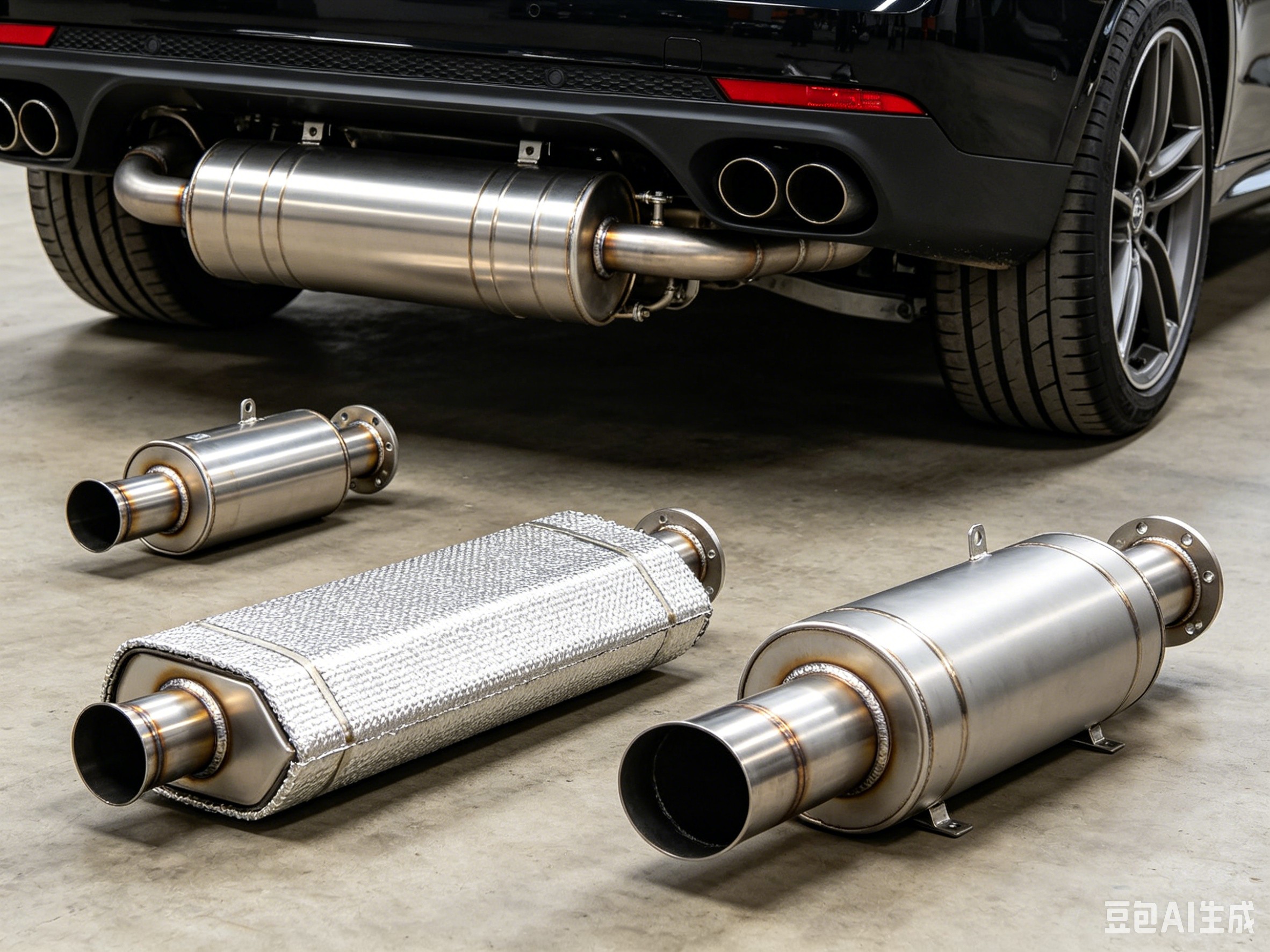
Shandong Obert Machinery Technology Co., Ltd. manufactures mufflers and exhaust system components for various applications, including generator sets, automotive vehicles, motorcycles, and construction machinery. The company provides OEM and ODM services for customers seeking products tailored to their technical and installation requirements.
If you are sourcing a generator set muffler for a new equipment project or looking for a customized exhaust solution, contact Shandong Obert Machinery Technology Co., Ltd. Share your application details, technical drawings, dimensions, and performance requirements to discuss suitable product options and request a quotation.
Shandong Obert Machinery Technology Co., Ltd. specializes in automotive exhaust systems and related metal parts. We manufacture mufflers, catalytic converters, exhaust pipes, and stamped components, and provide OEM & ODM services for commercial vehicle manufacturers with customized engineering solutions.